Originally Posted by romski123

good news therefore.
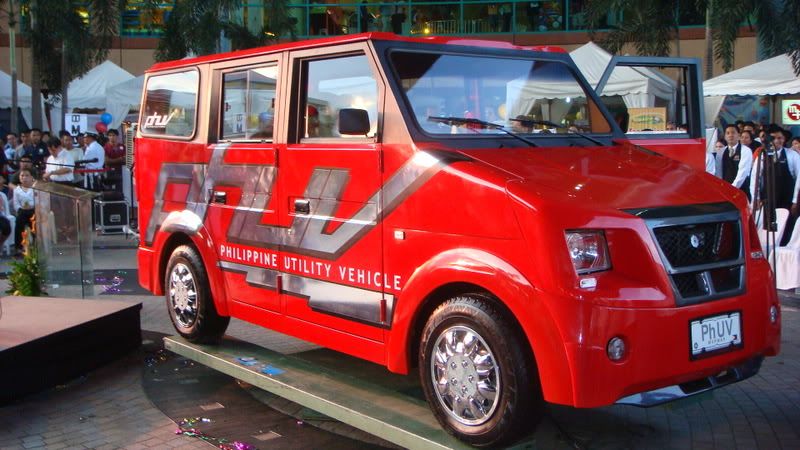
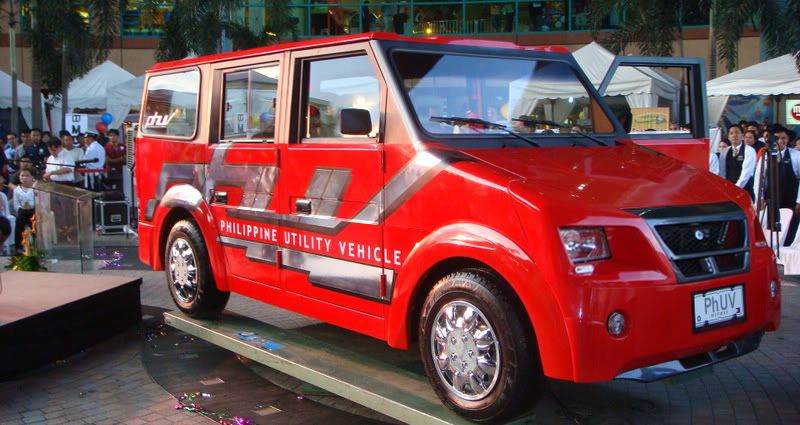
But hopefully, motolite can come up with more hi-tech batteries in the future especially for the e-jeepenys and other e-vehicles made by PHUV, INc.


The Largest Car Forum in the Philippines
- Forums
- Discussions
- Events
- Community
View Poll Results: Choose your design
- Voters
- 40. You may not vote on this poll
-
Design X
7 17.50% -
Design Y
6 15.00% -
Design Z
27 67.50%
Results 81 to 100 of 120
-

 Tsikot Member Rank 3

- Join Date
- Jun 2007
- Posts
- 2,857
May 11th, 2010 11:32 AM #81
-
 Tsikoteer
- Join Date
- Oct 2002
- Posts
- 29,354
May 11th, 2010 11:45 AM #82If ever Motolite develops "more hi-tech" batteries, it would be safe to assume it would also carry a higher price tag. Not something you would include into the e-jeepney which has a budget and price-limit to adhere to. Originally Posted by jpdm
-
Tsikot Member Rank 3
- Join Date
- Jun 2007
- Posts
- 2,857
May 12th, 2010 09:07 AM #83Motolite and Oriental battery Inc. should continuously upgrade its products because its the leading brand in the Philippines.
and with the possible widespread use of e-vehicles, newer and better performing batteries at affordable cost should be developed.
-
Tsikot Member Rank 3
- Join Date
- Jun 2007
- Posts
- 2,857
May 12th, 2010 09:11 AM #84any update romski123 of the original red phuv converted into electric? Originally Posted by romski123
Are there plans from MVPMAP to join the PBV program? The government plans to revive the very successful AUV incentive program via PBV, so aside from the Japanese and American assemblers are there Korean and Chinese assemblers joining?
Hopefully incoming President Noynoy Aquino will appoint a DTI secretary sympathetic to our local auto industry and the manufacturing industry as a whole.Last edited by jpdm; May 12th, 2010 at 09:21 AM.
-
Tsikoteer
- Join Date
- Oct 2002
- Posts
- 29,354
June 9th, 2010 01:46 AM #85The best bet would simply get the license to manufacture the old Toyota Tamaraw/Kijang FX under the PHUV brandname.
Do that for a few years to get practical experience and technology as well.
-
BANNED BANNED BANNED
- Join Date
- Dec 2006
- Posts
- 379
June 9th, 2010 02:17 AM #86shows what you know. Toyota will never allow that. Originally Posted by ghosthunter
-
BANNED BANNED BANNED
- Join Date
- Dec 2006
- Posts
- 379
June 9th, 2010 02:18 AM #87 Originally Posted by ghosthunter
more baseless assumptions. We work closely with Motolite and they are professional enough to cost their products based on materials used and not simply because it is called hi tech.
-
BANNED BANNED BANNED
- Join Date
- Dec 2006
- Posts
- 379
-
Tsikoteer
- Join Date
- Oct 2002
- Posts
- 29,354
June 9th, 2010 08:57 AM #89Yet somehow Malaysia did the same thing with their Proton Wira / Mitsubishi Lancer ... Originally Posted by romski123
-
Tsikoteer
- Join Date
- Oct 2002
- Posts
- 29,354
June 9th, 2010 09:10 AM #90So applause to Motolite in that they do not charge you guys with the cost of R&D of their newer battery designs. Originally Posted by romski123
-
BANNED BANNED BANNED
- Join Date
- Jul 2003
- Posts
- 2,267
June 9th, 2010 10:19 AM #91By the way, what is hype all about with regards to electric vehicles?
No tail-pipe emissions? Still doesn't mean it is environment-friendly. It depends on how we produce electricity.
-
Tsikoteer
- Join Date
- Oct 2002
- Posts
- 29,354
June 9th, 2010 12:26 PM #92I agree, electric cars still depend on electricity produced elsewhere like coal fired power-stations which still end up polluting the environment. Originally Posted by fourtheboys96
The plus side of electric cars is you can produce electricity cleaner like using alternative power produced via wind, solar, hydro, geo-thermal, etc which have a lower impact on the environment.
-
 SobrangBilisMagType!
- Join Date
- Aug 2004
- Posts
- 22,702
June 9th, 2010 01:30 PM #93Actually, the Philippines has one of the highest (don't know if it's highest overall) percentages of electricity produced by renewables, thanks to our hydroelectric and geothermal plants.
And due to the scale of electrical production, an e-vehicle's carbon footprint, even if the electricity comes from coal, is smaller on a per-kilometer basis.
The problem, as always, is price.
Ang pagbalik ng comeback...
-
Tsikoteer
- Join Date
- Oct 2002
- Posts
- 29,354
June 9th, 2010 03:04 PM #94Yet despite of it being such, we are paying among one of the most expensive electricity in the world. Originally Posted by niky
But a vehicle's carbon footprint is not only measured by the power it needs to run. It is also measured in the amount required to manufacture it. Also the wastes generated by the manufacturing, use and disposal of the vehicle and how much of the materials of the vehicle is recyclable.And due to the scale of electrical production, an e-vehicle's carbon footprint, even if the electricity comes from coal, is smaller on a per-kilometer basis.
The problem, as always, is price.
One of the main problems of electric cars is the battery, a big source of environmental toxins if not handled properly (especially a bigger problem given we do not have recycling centers to handle such items). A standard petrol car will only have one. But electric cars (example: ejeepney) will have twelve lead-acid batteries which will need to be replaced every 12 to 18 months of operation. (Do note that other electric cars use different batteries like lithium ion, etc which lasts longer but are more expensive to manufacture.)
Can you imagine a fleet of 100 ejeepneys producing 1,200 units of old lead acid batteries every year?Last edited by ghosthunter; June 9th, 2010 at 03:25 PM.
-
BANNED BANNED BANNED
- Join Date
- Jul 2003
- Posts
- 2,267
June 9th, 2010 03:15 PM #95life cycle analysis will do the job of determining the carbon footprint.
with regards to batteries, the issue of useful life and disposal/re-use/recycling thereafter can be addressed with the current available technology usually developed abroad.
so it will eventually comes down to costs and benefits. even if the cost of necessary technology and other social costs is huge, as long as the social benefit is larger, it will be better for us to push through with the project or electric vehicles in this case.
-
SobrangBilisMagType!
- Join Date
- Aug 2004
- Posts
- 22,702
June 9th, 2010 05:49 PM #96Actually, not "despite"... more like "because". Renewable energy power plants are not really cheap to run. Originally Posted by ghosthunter
Which is why I said the problem is the price. As this directly reflects those issues. Originally Posted by ghosthunter
well... if the demand grows big enough, battery recycling centers can grow around the e-vehicle scene. In fact, the trade in secondhand and reconditioned batteries may get a boost from the e-vehicle industry... the cottage industry revolving around e-vehicles in the US makes battery rebuilding and recycling a good business. Originally Posted by ghosthunter
Still, until the price sticking point is addressed, as well as the cost of maintenance (battery replacement), widespread adoption of EVs is unlikely.
Ang pagbalik ng comeback...
-
SobrangBilisMagType!
- Join Date
- Aug 2004
- Posts
- 22,702
June 9th, 2010 05:55 PM #97Actually, not "despite"... more like "because". Renewable energy power plants are not really cheap to run. Originally Posted by ghosthunter
Which is why I said the problem is the price. As this directly reflects those issues. Originally Posted by ghosthunter
well... if the demand grows big enough, battery recycling centers can grow around the e-vehicle scene. In fact, the trade in secondhand and reconditioned batteries may get a boost from the e-vehicle industry... the cottage industry revolving around e-vehicles in the US makes battery rebuilding and recycling a good business. Originally Posted by ghosthunter
Still, until the price sticking point is addressed, as well as the cost of maintenance (battery replacement), widespread adoption of EVs is unlikely.
Ang pagbalik ng comeback...
-
 Tsikot Member Rank 2
- Join Date
- Jan 2007
- Posts
- 3,438
-
 Tsikot Member Rank 4
- Join Date
- Nov 2005
- Posts
- 45,927
-
BANNED BANNED BANNED
- Join Date
- Nov 2008
- Posts
- 1,383
July 21st, 2010 12:01 AM #100Pinisa pero Panget pa rin. Even Photoshop can't make it look acceptable Originally Posted by donbuggy

Last edited by marg; July 21st, 2010 at 12:04 AM.
 Originally Posted by romski123