
http://opinion.inquirer.net/inquirer...ctric-VEHICLES
Rise OF electric VEHICLES
By Rissa Katrina M. Camongol
Philippine Daily Inquirer
First Posted 08:13:00 09/27/2009
Filed Under: Global Warming, Road Transport, Alternative energy
MANILA, Philippines—There’s something about electric vehicles. They don’t use gasoline or diesel and therefore don’t pollute the air. They run without noise and are cost-efficient. If Filipinos are educated about the benefits of using these “plug-in” modes of transportation, they would be wondering why we haven’t caught up with the craze yet.
Going “green” is all the rage right now because of climate change due to greenhouse gas emissions from human activities. Global warming threatens not only the survival of the human species, but also of other living things big and small that call Earth home.
Serious efforts have been made to counter or at least minimize the adverse effects of global warming. Because emissions like carbon dioxide from fossil fuels are a major source of global warming, people have sought alternative sources of energy like solar, hydro and wind power.
They have also come up with electric vehicles.
Four different kinds of electric vehicles now on the market were showcased at PowerTrends 2009, a renewable energy exhibition held on Sept. 9-10 at World Trade Center in Pasay City.
The e-vehicles displayed at PowerTrends—the e-jeep, e-[COLOR=blue !important][COLOR=blue !important]car[/color][/color], e-bike and e-quad—are generally priced higher than their gasoline-powered counterparts.
E-vehicle makers, however, are after advocacy, not profits, says Karl Magsuci, business planning and development manager for EVnnovations Inc., distributor of the first Land Transportation Office-registered e-car in the Philippines. “What we’re doing right now is education and raising awareness,” he says.
All four e-vehicles have zero carbon emission.
Their batteries could be charged via a simple household electric socket. Plans to build a biogas-powered recharging station are in the works.
In some areas, like Puerto Princesa City and Boracay, plans to phase out gasoline-powered jeepneys are underway, with e-vehicles gradually being incorporated into their transportation system.
e-car
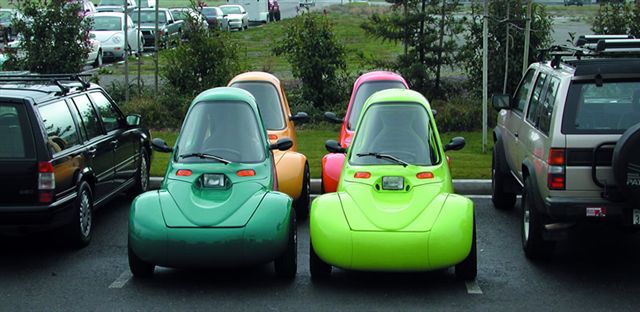
The Reva e-car, popularly known in London as G-Wiz, was first launched in Bangalore, India, in June 2001. EVnnovations Inc. wants to introduce Reva to the Philippines as a viable mode of transportation.
This two-seater uses eight 48-volt deep-cycle-lead-acid batteries, which charge in eight hours at a cost of P84. Charging for two hours already powers 80 percent of Reva’s batteries, says Magsuci.
Fully charged, Reva has a maximum range of 80 kilometers, 60 km when the air-con is used, and a top speed of 80 kph.
By contrast, a gasoline-powered car would require about P350-worth of gas to travel 80 km.
No change oil
There’s virtually no maintenance involved when using the e-car, says Magsuci. “No change oil, for instance.” The batteries have an average life span of two to three years. Changing batteries would cost around P50,000, says Magsuci.
The only drawback to the e-car is the price, says Magsuci. “There’s apprehension in the market due to the prohibitive price,” he says. The e-car is considered a luxury vehicle here, says Magsuci, thus, the cost almost doubles upon reaching our shores. Costing around $10,000 in India or around P500,000, plus import tax, Reva’s cost could reach close to a million pesos, he says.
He explains, however, that Reva is initially not meant for everyone, but only for a very specific market—the “high-end,” and environmentally conscious individuals and companies. “Walk the talk,” he says. “It’s time for us to introduce green alternatives, mitigate climate change, and make people ‘green’ in their motoring habits.”
Leasing program
Selling Reva in the Philippines may not be that easy, says Magsuci. That’s why EVnnovation is looking at the possibility of a renting or leasing program. Introducing the e-car through public transportation, he adds, is also another way to make its presence known.
The e-car, however, cannot compete with one’s existing car at this time, Magsuci says. “It’s only meant to supplement your current fleet as an alternative vehicle,” he says. “Think about the future, long-term effects.”
At the moment, there’s still no tangible support from the government for the promotion of Reva, according to Magsuci. He hopes that trade shows such as PowerTrends will help promote “green” alternatives.
For more information on Reva electric car, contact Karl Pietrus Magsuci of EVnnovations at 3701314, fax No. 3741671-72, e-mail kbmagsuci*motolite.com, or visit http://www.evnnovations.com/. Their office address is 8F Ramcar Center 80-82 Roces Avenue, Diliman, Quezon City.
e-jeep
The e-jeep was first launched in 2007 in the cities of Makati, Puerto Princesa and Bacolod as part of the Climate Friendly Cities project of Green Renewable Independent Power Producers Inc.(GRIPP). It started its commercial run last year. GRIPP is a local consortium of environmental groups, including Greenpeace.
Tapped by GRIPP to produce the electric vehicle, the Motor Vehicle Parts Manufacturers Association of the Philippines now assembles e-jeepneys through its business arm, Philippine Utility Vehicles Inc. (PhUV). The first prototypes were imported from China.
The e-jeep costs P650,000. It uses 12 6V 220AH batteries, which charge for eight hours at a cost of P150, says John Marasigan, PhUV assistant sales manager for electric vehicles. A fully charged e-jeep has a maximum range of 55 km and a top speed of 35 kph.
Thirty-five units of this 14-seater have so far been sold to a number of government and private institutions in the Philippines, 20 of which are in Makati, says Marasigan. They include De La Salle University in Dasmariñas, Cavite; Plantation Bay Resort in Cebu; the Bangko Sentral ng Pilipinas in Manila; the House of Representatives in Quezon City; and Embarcadero waterfront development in Legazpi City.
e-quad
The e-quad, or e-tuktuk, marks its launching at PowerTrends 2009. With a seating capacity of six, the vehicle is designed as an alternative to tricycles in subdivisions, according to Marasigan. “It is ideal in subdivisions because there’s less noise,” he said. “Plus it can run in floods.” The e-quad sells for P300,000.
For inquiries about the e-jeep, e-bike and e-quad, contact John Marasigan of Philippine Utility Vehicles Inc. at 9365022 or 9308012, e-mail johnalfonsomarasigan*yahoo.com, or visit www.gripp.org.ph and www.ejeep.org. The office address is 2 Susano Road in Bo. Deparo, Novaliches, Caloocan City
e-bike
Twenty-five units of e-bikes have so far been sold by Philippine Utility Vehicles Inc. Ideal for use in beach resorts and other recreational spots, most e-bikes can now be seen running in Boracay.
Selling for P27,000, the e-bike has a maximum range of 25 km and top speed of 20 kph. Its batteries require only four hours to fully charge, costing around P100.
What’s good about the e-bike is that once the battery runs out of power, the bike can still be used in the traditional way. By pedaling the e-bike, one does not only get good exercise, but also charges the batteries.

The Largest Car Forum in the Philippines
- Forums
- Discussions
- Events
- Community
Results 1 to 20 of 88
-
 BANNED BANNED BANNED

- Join Date
- Dec 2006
- Posts
- 379
October 14th, 2009 03:12 PM #1
-
 Tsikot Member Rank 3
- Join Date
- Jun 2007
- Posts
- 2,857
-
Tsikot Member Rank 3
- Join Date
- Jun 2007
- Posts
- 2,857
October 22nd, 2009 08:13 AM #3
-
Tsikot Member Rank 3
- Join Date
- Jun 2007
- Posts
- 2,857
October 22nd, 2009 08:23 AM #4China made EVs
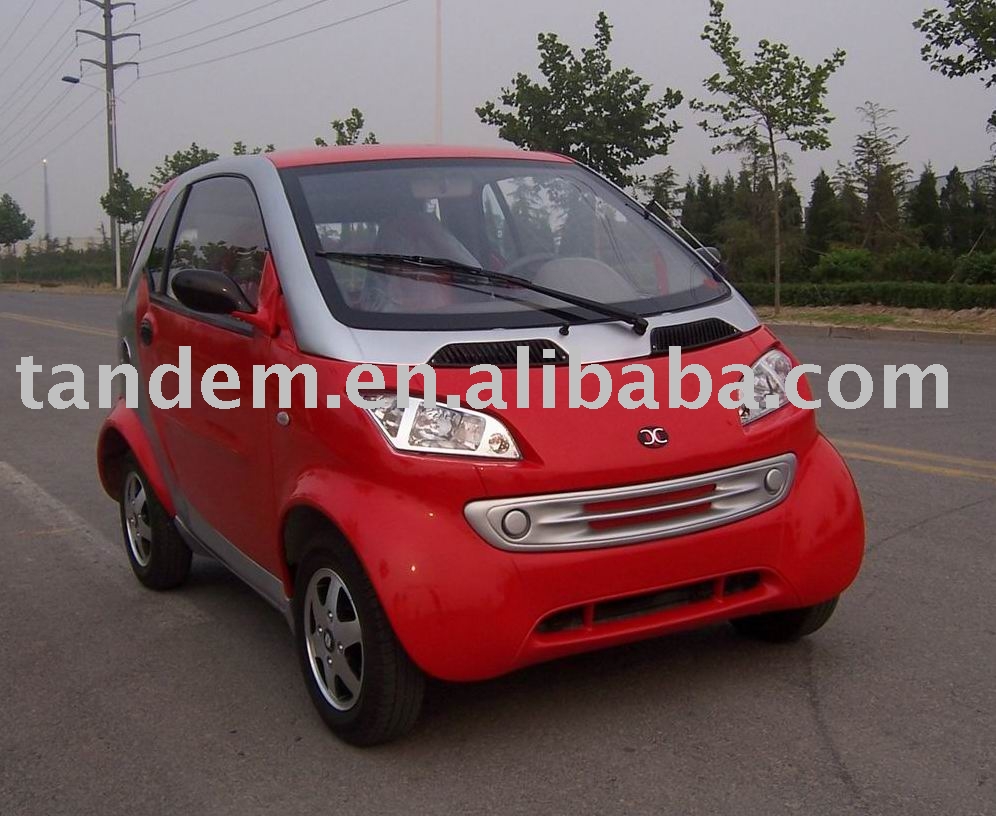
Shanghai Tandem Motor Co., Ltd.
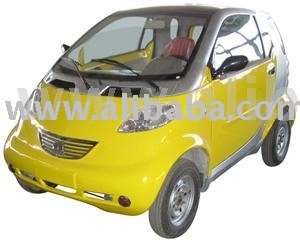
Ningbo bestar
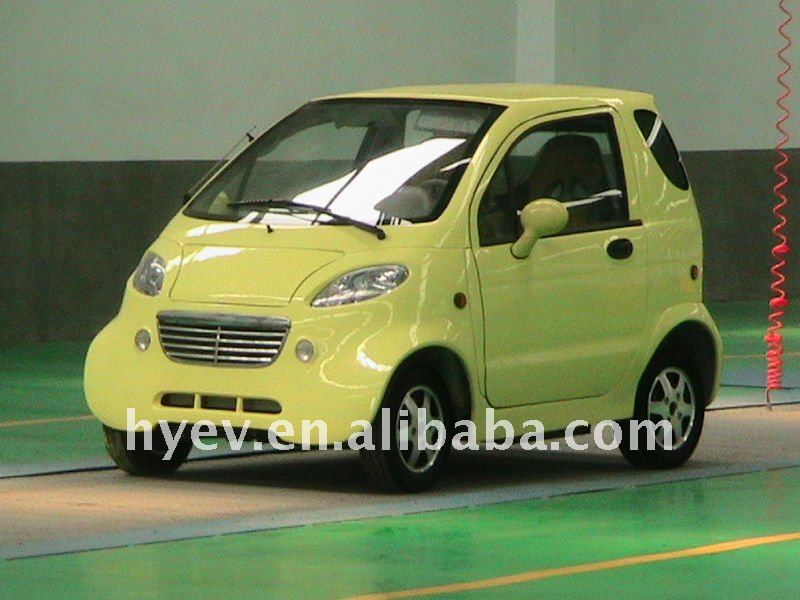
Huoyun Electric Car (hy-B22120
-
 Tsikoteer
- Join Date
- Oct 2002
- Posts
- 29,354
October 22nd, 2009 09:25 AM #5[SIZE="3"]SO the future of electric vehicles in the Philippines is "Made is China".[/SIZE]

-
Tsikot Member Rank 3
- Join Date
- Jun 2007
- Posts
- 2,857
October 22nd, 2009 09:50 AM #6Source: WikepediaWe are witnessing the rise of electric car globally--of course now in the Philippines, I think itwill be great to take a look at the electric cars made in in the past:

Electric vehicle model by Ányos Jedlik, the inventor of electric motor (1828, Hungary).

German electric car, 1904, with the chauffeur on top
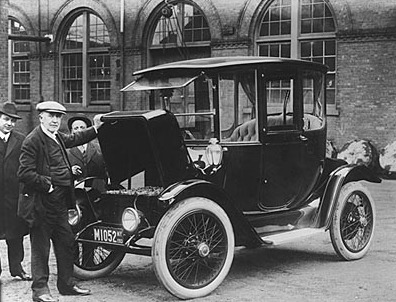
Thomas Edison and an electric car in 1913 (courtesy of the National Museum of American History)

The Henney Kilowatt, a 1961 production electric car
Taken from: http://en.wikipedia.org/wiki/Electric_carLast edited by jpdm; October 22nd, 2009 at 10:22 AM.
-
Tsikot Member Rank 3
- Join Date
- Jun 2007
- Posts
- 2,857
October 22nd, 2009 09:57 AM #7Source: Wikipedia1990s to present: Revival of mass interest
After years outside the limelight, the energy crises of the 1970s and 80s brought about renewed interest in the perceived independence electric cars had from the fluctuations of the hydrocarbon energy market.
The 2000s energy crisis brought renewed interest in hybrid and electric cars.

The General Motors EV1, one of the cars introduced as a result of the California Air Resources Board (CARB) mandate, had a range of 160 mi (260 km) with NiMH batteries in 1999

The Think City is a popular electric car in Europe.

The Nissan LEAF is an electric car that is expected to be marketed in the North America, Europe, and Japan, beginning in autumn 2010.

The REVAi, also known as the G-Wiz, is thetop-selling electric car in the world.
In the Philippines, I think PHUV, INc. and their EVs will definitely popularize the use of EVs in the country.
Taken from: http://en.wikipedia.org/wiki/Electric_carLast edited by jpdm; October 22nd, 2009 at 10:22 AM.
-
Tsikoteer
- Join Date
- Oct 2002
- Posts
- 29,354
October 22nd, 2009 09:59 AM #8And here is something that JPDM is not mentioning... Originally Posted by jpdm

Taken from: http://en.wikipedia.org/wiki/Electric_car
Within a decade of the creation of the transistor, Henney Coachworks and the National Union Electric Company, makers of Exide batteries, formed a joint venture to produce the first modern electric car based on transistor technology, the Henney Kilowatt. Despite the Kilowatt's improved performance with respect to previous electric cars, consumers found it too expensive compared to equivalent gasoline cars of the time, and production ended in 1961.
-
Tsikot Member Rank 3
- Join Date
- Jun 2007
- Posts
- 2,857
October 22nd, 2009 10:16 AM #9Indeed, globally and in the Philippines, the electric vehicles are on the rise.
I hope the government and the private sector will continue in developing our capability in producing EVs..Last edited by jpdm; October 22nd, 2009 at 10:20 AM.
-
Tsikoteer
- Join Date
- Oct 2002
- Posts
- 29,354
October 22nd, 2009 10:24 AM #10EVs and hybrids of today have the same problem. They are both too expensive when compared to their gasoline/diesel counterparts. And EVs have it worst because of their generally limited range and performance. There are certain EVs which have long range and performance of a sports car but those are priced well beyond the reach of the typical car buyer. Originally Posted by jpdm
-
Tsikot Member Rank 3
- Join Date
- Jun 2007
- Posts
- 2,857
October 22nd, 2009 10:39 AM #11Global oil and gas prices are going up again. Eventually, when fossil fuel/ hydrocarbons become very scarce and expensive, there is no choice but to look for other fuel source.
Hopefully, with better and cheaper technology and raw materials, EVs will become less expensive in the near future.
-
Tsikoteer
- Join Date
- Oct 2002
- Posts
- 29,354
October 22nd, 2009 10:47 AM #12Oil prices are going up again but I don't think it would also mean OIL will be scarce, just more expensive. Why? Originally Posted by jpdm
Simple, more expensive oil means untapped oil deposits that are uneconomic to recover are now economically viable. Also older oil wells that have been closed due to reduced production (uneconomic to retain open) are also now viable again including new oil extraction methods (including water and gas injection methods) which can increase the total output of an existing oil well.
In the future, EVs would probably NOT go down in price but since the increase in fuel prices, they would become a more viable alternative for those who can afford the prices.
And for the meantime, I am still motoring happily with my car fuelled by very affordable Auto-LPG.
-
Tsikot Member Rank 3
- Join Date
- Jun 2007
- Posts
- 2,857
October 22nd, 2009 11:01 AM #13Maybe not now, not in the immediate future, but these non-renewable resources like oil and gas will definitely and inevitably run out in the future.
Vehicles using other fuel should be invented. EVs, hydrogen powered and even these hybrid cars should be mass produced in the future.
I think the reason why EVs, Hybrids and hydrogen powered vehicles are expensive because they are not mass produced. Just like the e-jeepneys, e-trikes and e-quad of PHUV, INc.
Now, if hypothetically, gas and oil prices have reached 200-1000 dollars per barrel (perhaps due to scarcity, speculation, demand and greed with a global population bursting in the near future especially in populous ASIA), more people will turn to vehicles run by other fuels.
-
Tsikoteer
- Join Date
- Oct 2002
- Posts
- 29,354
October 22nd, 2009 11:15 AM #14But what timeline are we talking about. Some scientists said it would be in the next 50 years. Others say 100 years while even other predict oil and gas reserves lasting 200 years or more. Originally Posted by jpdm
There is one basic flaw with EVs and hydrogen vehicles. They use electricity and most of that is generated via oil or coal burning power stations. In the end, your electric vehicle is still plugged into oil.Vehicles using other fuel should be invented. EVs, hydrogen powered and even these hybrid cars should be mass produced in the future.
I think the reason why EVs, Hybrids and hydrogen powered vehicles are expensive because they are not mass produced. Just like the e-jeepneys, e-trikes and e-quad of PHUV, INc.
The world does not yet have enough renewable energy powerstations to generate enough power to sustain itself. The other alternative which is NUCLEAR power has questionable benefits in the face of it's long term "disposal" problems.
Yes, hypothetically that may happen but other forces will come into play. Economies will slow down if the price of oil reaches a certain level. And that would curb demand for oil and result in a price reduction. We already have seen this happen in the last year.Now, if hypothetically, gas and oil prices have reached 200-1000 dollars per barrel (perhaps due to scarcity, speculation, demand and greed with a global population bursting in the near future especially in populous ASIA), more people will turn to vehicles run by other fuels.
-
Tsikot Member Rank 3
- Join Date
- Jun 2007
- Posts
- 2,857
October 24th, 2009 09:17 PM #15Many times in the past, the world had been a hostage of these people who own and manipulate oil and gas resources (OPEC and speculators)..
Its time for the world and small countries like the Philippines (who actually have natural gas reserves and other alternative energy sources (geothermal energy, we are one of the largest producers will alot of potential to harness more) to turn to other alternatives so that the oil shocks of the 1970s (Marcos in the Philippines) and in 2006-2008 and and their negative effects will be mitigated..
Hydrogen powered vehicles, EVs and even solar powered cars (if possible)may not create a ripple now but definitely in the future.
-
Tsikoteer
- Join Date
- Oct 2002
- Posts
- 29,354
October 24th, 2009 09:51 PM #16Even the best solar powered car is just a lab experiment or proof of concept that cannot be made practical unless you want to drive a cockroach shaped car that is three times the size of a pingpong table and can only seat one. Originally Posted by jpdm
Hydrogen and EVs need one major thing, a source of power to rechange their power systems, might that be to generate more hydrogen or to recharge their batteries.
The Philippines is NOT rich in natural gas reserves. We only have a small deposit.
Alternative power like solar, wind, geothermal have limits and problems.
Solar is expensive and doesn't run at night. It requires a lot of relatively flat land. In the world, solar power stations are few and mostly experimental in nature.
Wind is fickle and limited to certain areas. The turbines themselves can only generate limited amounts of power requiring massive wind farms to be built if it is to power a small city. The turbines themselves can damage the eco system by killing birds and insects native to the area.
Geothermal power is also problematic. It can damage fragile local eco systems by releasing excess heat into a river,etc. Discharged steam can be acidic. Equipment used in geothermal systems require expensive and regular maintenance due to the corrosive nature of the heat source.
Hydro-electric power is controversial in many ways. One is the destruction of habitats and eco-systems by the construction of the dam and flooding of the land behind the dam. The river after the dam would also be affected because of the reduced flow of water. The dam itself would only have a limited life due to silt build up behind the dam which reduces it's effectiveness. Cost is another factor since dams are require mass amounts of material and labor to build.
Just saying that alternative power is not all that you read. It might be part of the answer for future power needs but we should be ready to pay the cost as well.
Biomass is another potential source but how many people would be willing to live beside an area with multiple bio-digesters which can become a big methane bomb if an accident occurs? And bio-digesters do require periodic attention to operate properly. Will the "profits" outweigh the operating costs? Or will this be another perpetually funded government white elephant?
-
 twoyotas
- Join Date
- Mar 2009
- Posts
- 21,667
October 24th, 2009 10:07 PM #17I find the REVA e-car expensive considering that it seats only two. Travels up to 60km only ( w/ aircon on ) and requires you to change your batteries for every two years which costs at around 50k each. And add the battery charging fee and time to be spent.
-
Tsikoteer
- Join Date
- Oct 2002
- Posts
- 29,354
October 24th, 2009 10:14 PM #18 Originally Posted by renzo_d10
The battery replacement thing also affects the e-jeepney at the tune of around P150,000 to P200,000 depending on who's costing you would like to believe. Just for the sake of making it simpler, we pegged it to around P160,000 per battery pack every 1.5 years.
-
Tsikot Member Rank 3
- Join Date
- Jun 2007
- Posts
- 2,857
October 24th, 2009 10:16 PM #19IMHO, I dont subscribe with your assessment or idea about these alternatives. For me, they are feasible and realistic alternatives in the near future and its a good thing this Arroyo government realized their importance with the passage of the RE law and the climate control law. the Biofuels act of Zubiri also is a landmark law.The Agenda 21 (sustainable development) of the Ramos administration should be continued by future Philippine govenment and our adherance to the Kyoto Protocol should be sustained. Originally Posted by ghosthunter
Of course, everything has a cost. But such externalities and spillovers are alot manageable and acceptable compared to our over-dependence on hydrocarbons (getting costly) and its impact to the environment.
I forgot to mentioned windpower, which I think the government has pending investment proposals coming from foreign and local investors.
The era of the coal powerplants, diesel powerplants must come to an end.
Now, are you telling me these are not alternatives?
What is your alternatives then if some ecological economists' idea that eventually hydrocarbon will run out?
By the way, are you an ecological economist?
I really want to know.
Because all sorts of alternatives put forward by ecological experts seem to be not feasible to you.Last edited by jpdm; October 24th, 2009 at 10:34 PM.
-
Tsikot Member Rank 3
- Join Date
- Jun 2007
- Posts
- 2,857
October 24th, 2009 10:23 PM #20 Originally Posted by renzo_d10
Agree.
Definitely expensive especially in the Philippines. It will get any buyers here I suppose with its prohibitive price. I rather see people buy fuel efficient car like the locally made Toyota Vios or e-jeepneys, e-quad or e-trike for business.


 Originally Posted by jpdm
