
Well, the wishlist is long and I hope the PAF gets the equipment it deserves. We've been "all air and no force" for a long time now.

The Largest Car Forum in the Philippines
- Forums
- Discussions
- Events
- Community
Results 81 to 100 of 392
-

 Tsikot Member Rank 4

- Join Date
- Oct 2002
- Posts
- 3,872
October 11th, 2009 08:25 PM #81
-
 Tsikoteer
- Join Date
- Jan 2006
- Posts
- 12,398
October 11th, 2009 10:26 PM #82 Originally Posted by Altis6453

Over at timawa.net (Philippine Defense Forum), there's been so many discussions on which aircraft should the PAF acquire. Personally, I think the PAF could do with older but still capable designs. Where the PAF needs improvement is in the maintenance of the aircraft. Unfortunately, it costs a lot to keep an air force flying. The government should realize that and budget accordingly.
-
Tsikoteer
- Join Date
- Aug 2003
- Posts
- 9,720
October 12th, 2009 01:18 PM #83 Originally Posted by Jun aka Pekto
i'm no expert, but the Harrier isn't the easiest plane to fly....and it can't go supersonic. imho its STOL/VSTOL capabilities are best suited for ground attack/support role. But as old as it is, try landing an F-22 on a parking lot B)
-
Tsikot Member Rank 4
- Join Date
- Oct 2002
- Posts
- 3,872
October 12th, 2009 06:20 PM #84Gosh, I was wrong in my initial list. We need more than just 24 multi-role fighter jets if we hope to ably defend and patrol our airspace. Possibly around 60-80 or so.
-
Tsikoteer
- Join Date
- Jan 2006
- Posts
- 12,398
October 12th, 2009 07:29 PM #85No need. A variant of the F-35 was developed for that exact role. An F-22 is designed for one thing only: air superiority. Originally Posted by badkuk
-
 Ignore
- Join Date
- Oct 2006
- Posts
- 5,994
October 13th, 2009 07:49 PM #86^what i was implying is that i'm pointing out that the F-22 is not invincible as most people think. it's possible to track and detect them with the emergence of modern(although it is a paradox that they are modern yet they are going back to low frequency band since nothing is invisible under 2GHz) radars and highly modern OLS/IRST.
the F-35 on the otherhand, being ambitious, is facing plenty of development problems. as stated by Kopp, it has undergone some weight losses during CTOL trials. it is also interesting to note that the F35 is more technologically advance than the F22 since the F22, being a close type architecture, is incompatible with some key technologies like helmet mounted display, although the raw numbers suggest that it is the most capable fighter theoretically.
although recently, the defence dept. cut its F35 orders by half, from 1763 to 858, which expectedly resembles the F22 acquisition. hence, the F35 will have a bigger price tag than what is anticipated.Damn, son! Where'd you find this?

-
 #1 Pound for Pound
- Join Date
- Oct 2002
- Posts
- 647
October 14th, 2009 01:58 AM #87I'm not sure if the air force are testing the new jets or it's the us military. i just saw last sunday nung flood sa amin sa may lapaz tarlac a F16 jet flying low and aggresively. Pabalik balik sa town namin.
-
Tsikoteer
- Join Date
- Jan 2006
- Posts
- 12,398
October 14th, 2009 03:46 AM #88You're certainly correct in pointing out that the F-22 isn't invincible. There's no such thing as an invincible aircraft. Either someone invents a counter or someone gets lucky. Even the brass aren't saying the F-22 is invincible. But, the F-22 is a force multiplier meaning one F-22 can take on multiple enemies and have a reasonable chance of coming out victorious. Originally Posted by safeorigin
As for new radar systems being developed that can detect the F-22..... The very premise of radar is to send out a radio wave, have it bounce off the target, and return the signal to a receiver. If the "new" detection device doesn't work off that principle, it isn't radar.
An F-22's surface is designed to both deflect and absorb radar signals, it won't matter what frequency the radar signal is if it doesn't get back to the receiver.
I've read through some forums about detecting an F-22. One of them keyed on an F-22 being detected by a radar that can see the "wake" behind the aircraft. That's fine and dandy except I'm wondering what particles the radar beam will bounce off from. Most current radars bounce off drops of rain as a minimum. That means if there's a layer of clouds extending from the surface to 10,000ft but there's no raindrops within, the radar will show it clear (nothing on the screen). It might as well be a sunny day as far as the radar is concerned.
There's a lot of what ifs with the F-22, most of them theoretical. I'm seeing the same stuff I saw with the F-15 when I was still a kid. A lot of people said it's too big, too much workload for the pilot, too expensive. Most of the detractors went silent after the Israelis showed what the F-15 can do.Last edited by Jun aka Pekto; October 14th, 2009 at 03:54 AM.
-
Ignore
- Join Date
- Oct 2006
- Posts
- 5,994
October 14th, 2009 01:36 PM #89actually, the F22 is detectable at 30-40 NM(depending on which aspect) with the Irbis-E(Su-30/35) radar since the aircraft has an RCS of 0.0001 m^2. OLS 35 itself has an optimal track/detection range of 45 KM although in a really clear day(which is unlikely) can be pushed to 200KM(as reference, the F-14/18 FLIR has a similar range to the AIM-54 which is 160KM)
moreover, defense systems like the S-400 series which use network centric datalinking of multiple low frequency(detection via triangulation method), X band frequency(tracking and locking) radars and electroptronic(heavy noise environment) systems, which is a major leap from the first gulf war, can be used to exploit the stealth limitations of such aircraft. one has to note that geometric stealth is applicable for higher frequency radars whereas active cancellation/jamming methods are more useful in the ultra low frequency radars. one such aircraft that use active cancellation is the Rafale.
one such proof that "anti-stealth" tactics can be employed is used during the kosovo war, where 2 F-117's were downed(although NATO claims only 1) using S-125 system which is said to be "ancient" but is however robust because of its low frequency radar(although they had difficulty tracking it because of its low processing capability).
albeit, stealth isn't a black and white thing but has different levels and forms.Damn, son! Where'd you find this?
-
Tsikoteer
- Join Date
- Jan 2006
- Posts
- 12,398
October 15th, 2009 04:37 AM #90As for the F-117..... One was shot down outright while another was damaged in a different mission but managed to get back home. The damaged one was written off. So technically yes, that's two F-117's lost. The F-117 became trackable when the bomb bay doors were opened and rain reduced the effectiveness of the radar absorbent coating. All radars will bounce off water drops. The Serbs simply filled the sky with missiles. Still, two F-117's lost isn't bad considering the missions they flew would've been suicidal to most other aircraft and the Serbs weren't exactly pushovers either. Originally Posted by safeorigin
As for the F-22.... it has the radar cross section of a beetle. It'll most likely fly very high above most weather. So, it won't be trackable in the same cincumstances as the F-117's were.
Until an actual Su-30/35 is used to track an F-22, everything remains theoretical.
Basing similar situations from the past, I'm betting it'll be the US itself who'll manage to "acquire" an Su-30 (or the services of other Western frontline fighters) and be the first to actually test it against the F-22. They then can formulate appropriate counters/tactics.
-
Ignore
- Join Date
- Oct 2006
- Posts
- 5,994
October 15th, 2009 01:01 PM #91actually the bomb bay weren't open but the F-117's were in-transit. The serbs devised a plan of radar masking their units near the flight path, taking advantage of the mountainous terrain. so, you can imagine the difficulty of having proper intel and reconnaissance in the kosovo region. NG engineers already explained that it's impractical for them to optimize stealth on the ultra low frequency band on smaller aircraft but was possible for larger ones like the B-2 to a certain degree since RAM gradient can be done.
as for the claims of the F-22 getting track, it's easily done using IRST/OLS. The F22 itself isn't that IR optimized as the YF-23 afterall. now many people will contradict my statement, but it's true. USAF never intended the aircraft to undergo IR stealth optimization unlike the USN. many people will assume that supercruise will reduce the IR signature but in reality, it only saves fuel. the IR signature of a supercruising plane has no significant difference from an afterburning plane.
on radar tracking, it's possible. how do you suppose will an F-18 get a kill if it didn't track it? on a similar note, the EF 2000 was able to "kill" the F22 using the METEOR test unit at BVR. geometric stealth itself follows the theory of edge diffraction by the russian physicist pyotr ufimstev. german and russian radar technicians have already proved that it's possible to track objects with an RCS less than 0.001. also, you have to note that airborne radars are doppler radars meaning they filter contacts based on speed. surely, there's no such thing as an insect flying at transonic-supersonic speed.
also, PAKFA is scheduled for its flight later this year
Last edited by safeorigin; October 15th, 2009 at 01:09 PM.
Damn, son! Where'd you find this?
-
Tsikoteer
- Join Date
- Jan 2006
- Posts
- 12,398
October 15th, 2009 02:09 PM #92The F-22's heat signature isn't as optimized as the F-23's. But, it has been reduced compared to current aircraft. Originally Posted by safeorigin
There is a big difference between afterburning and supercruise. If you can see a bright plume behind the aircraft, it's afterburning. That's a big, hot heat signature for an IR missile to lock on to. In supercruise, there's no such plume. It's mostly exhaust which is cooler. The plume would've been contained by baffles I'd imagine ahead of the thrust vectors. The F-22 does have afterburners, hence photos of it with a plume behind.
You know what? This could go on and on. But unless all these come out of theory and into an actual demonstration, it's pointless. I'd give both sides the benefit of the doubt. But, there are other things to consider besides tracking an F-22. Finding it is one thing. Killing it is another.on radar tracking, it's possible. how do you suppose will an F-18 get a kill if it didn't track it? on a similar note, the EF 2000 was able to "kill" the F22 using the METEOR test unit at BVR. geometric stealth itself follows the theory of edge diffraction by the russian physicist pyotr ufimstev. german and russian radar technicians have already proved that it's possible to track objects with an RCS less than 0.001. also, you have to note that airborne radars are doppler radars meaning they filter contacts based on speed. surely, there's no such thing as an insect flying at transonic-supersonic speed.
As for Doppler radars. I've been using weather Doppler radars on a daily basis since 1994 and a system manager of one for a while. Even though weather Dopplers operate on a lower frequency, the principles are the same (boring stuff even to a boring person like myself ). I've done a lot of filtering algorithms and I'll tell you what, filtering contamination such as something as mundane as giant wind turbines on top of a mountain isn't easy. There's still enough contamination from them to mask very localized weather.
Last edited by Jun aka Pekto; October 15th, 2009 at 02:14 PM.
-
Ignore
- Join Date
- Oct 2006
- Posts
- 5,994
October 15th, 2009 04:48 PM #93supercruising has no significant difference since the thermal output is the same as an afterburning aircraft at 1.6 because you have to remember that a IR signature isn't all about exhaust plume but it's also the surface of the plane. the faster you go, the hotter the surface will be and most of the IR acquisition takes place in the front aspect during interception phase.
Also when it comes to the exhaust supercrusing engines are not necessarily going to produce less of an IR plume. Because thrust is determined by exhaust velocity (heat) and mass flow (volume). Engines like the F119 achieve their high thrust without reheat by increasing the heat and volume of the air coming out of the engine before igniting more fuel in the compressed exhaust. So while it may not look as spectacular to the human eye it could very well be as big, bigger or near as big an IR plume as an engine using afterburner to produce the same thrust.
as for radar systems that have undergone low observable RCS trials, there are plenty of them.

P-18 being the radar used by the S-125(Sa-3) that took out the 2 F-117'sDamn, son! Where'd you find this?
-
Tsikoteer
- Join Date
- Jan 2006
- Posts
- 12,398
October 15th, 2009 10:51 PM #94That makes sense. But one thing that throws a monkey wrench on that assumption is if there's some kind of heat insulation between the engines and the aircraft surface such as a layer of much cooler air routed from the intake or even a ceramics coating similar to the Space Shuttle's. Another would be the the composition of the aircraft surface. Obviously, different materials will have different heat tolerances. I'm not privvy to any of that stuff. So your question's as good as mine. If anything, there are articles that show the F-22 has sensors that determine if the stealth capability on any part of the aircraft has been compromised due to say, a temperature threshold being reached. The pilot would then throttle down as needed. Originally Posted by safeorigin
From my understanding of supercruise, temperatures would be similar to conventional fighters in non-afterburning mode. Of course it's still going to be hot. But, afterburning is much hotter which is practically a beacon that can be seen much farther out than a non-afterburning engine.Also when it comes to the exhaust supercrusing engines are not necessarily going to produce less of an IR plume. Because thrust is determined by exhaust velocity (heat) and mass flow (volume). Engines like the F119 achieve their high thrust without reheat by increasing the heat and volume of the air coming out of the engine before igniting more fuel in the compressed exhaust. So while it may not look as spectacular to the human eye it could very well be as big, bigger or near as big an IR plume as an engine using afterburner to produce the same thrust.
Besides, that part where you say igniting more fuel in the compressed exhaust sounds exactly like afterburning to me.
-
Ignore
- Join Date
- Oct 2006
- Posts
- 5,994
October 16th, 2009 02:12 AM #95that is exactly why there is no supercruise requirement for the A-12 and F/A-XX since they want optimum IR stealth. Although in the ATF program, NG opted for the IR optimized stealth design since USN was initially part of it but then they backed out and wanted a different aircraft which led to the cancelled A-12 and F/A-XX. i'll try to PM you an image of the YF-23 which is likely to please the USN if it hadn't backed out
supercruising on the otherhand doesn't necessarily mean that it would produce less IR emissions as i stated since having the same thrust as an aircraft which is afterburning will also produce the same amount of IR signature. this was explained by NG engineers in the concensus of using ceramic plates in the exhaust nozzle with ofc the engine exhaust face offset horizontally to minimize IR signature.
as for surface IR signature, this will give you an idea of what an IRST image looks like.

because of these concerns, the JSF development is further extended for the purpose of implementing active cooling.
http://img405.imageshack.us/img405/4189/yf23.gif
*will be deleting it shortly as promised from my "friend"Last edited by safeorigin; October 16th, 2009 at 02:24 AM. Reason: apparently, i can't PM you so posting it here anyway
Damn, son! Where'd you find this?
-
Tsikoteer
- Join Date
- Jan 2006
- Posts
- 12,398
October 16th, 2009 04:20 AM #96Hmmm. Looks like a FLIR image. I've seen plenty of those during debriefs in the past. Originally Posted by safeorigin
Anyway, I find it hard to believe the temperature of the exhaust from a supercruising engine would be the same as an afterburning engine. For one thing, the exhaust from the supercruise aircraft would interact right away with cooler air outside while the white-hot plume of an afterbrning engine extends well behind the exhaust nozzle.
Maybe I can go to the next Langley AFB open house if it has one. It's 4-5 hours away. An F-22 might be put through its paces.
I'm under the impression both the F-22 and F-35 have active cooling, especially up front to reduce the IR signature. Since F-22's will most likely work in packs... If an adversary's motions indicate it's using IRST to track an F-22 up front, other F-22's can take advantage of an IRST's narrow viewing angle and hit that aircraft from the flanks.
Supercruise isn't really that big a deal since the vast majority of dogfights occur in subsonic speeds. I imagine where supecruise would come in handy is during close in fights when there's a need to speed up quickly and regain energy. With supercruise, the F-22 has a better chance to speed up without needing to light up the afterburners (which would be tantamount to lighting a beacon for IR seekers).
As for the YF-23, no need. I had a video of the ATF competition dating back from the mid 90's.
-
 Tsikot Member Rank 5
- Join Date
- Sep 2003
- Posts
- 21,384
October 16th, 2009 07:13 AM #97Priority: Modern Paga-Asa weather forecasting equipments.
Isunod na lang yang eroplano.
-
 Mutawa'een
- Join Date
- Nov 2005
- Posts
- 7,976
October 16th, 2009 08:48 AM #98dapat mga easy to maintain choppers at ilang chinook para sa mass evacuation and rescue. dagdag na pyesa para sa C-130 cargo natin dahil 2 nalang ata ang gumagana - tapos bibili pa sila


-
Tsikoteer
- Join Date
- Aug 2003
- Posts
- 9,720
October 16th, 2009 10:44 AM #99imho, transport/cargo chopper na lang ang bilhin, though i'm not sure if the chinook is the best choice -- you have two engines to maintain. The old chopper from the RipTide tv series come to mind(ung Screaming MiMi B)
kahit 2 lang ung C-130 natin, madami namang mga cargo/brokerage companies diyan na me cargo plane. Choppers don't need runways B)
-
Ignore
- Join Date
- Oct 2006
- Posts
- 5,994
October 16th, 2009 04:20 PM #100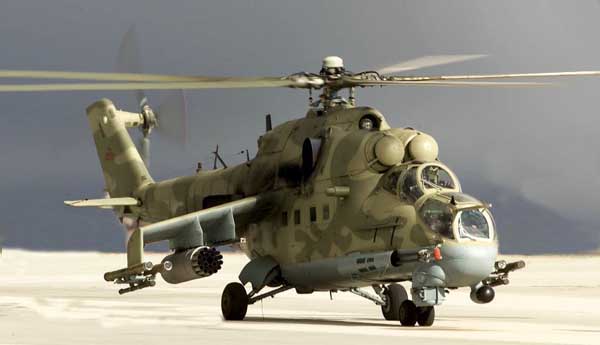
i kinda prefer this one though. 2 in 1 monster chopper :D
it can transport people while blasting the hell out of people
used to be an afghan's nightmare when they weren't armed with stingers since the vulnerability of choppers is the exhaust thoughDamn, son! Where'd you find this?

 Reply With Quote
 Originally Posted by Altis6453
