
Working for the development of a new type of jeepneys[SIZE=3]PHUV, Inc.[/SIZE]
[SIZE=4]MVPMAP[/SIZE] on the other hand, through [SIZE=4]PhUV Inc.[/SIZE], is fortifying its position as the pioneering organization that will not only help rekindle the Philippine auto manufacturing industry but will also push for sustainable and environment-friendly communities.
"This advocacy started when we locally designed in 2006 and developed in 2007 the Philippine Utility Vehicle (PhUV) to prove that given the opportunity and the resources, the Pinoy engineer can design and build a truly Pinoy vehicle.
The PhUV Program has been in the Investment Priority Plan (IPP) of the Board of Investments since 2007.
This e-jeepney is just a reincarnation of the PhUV as a pioneering endeavor under the IPP", Mr. Raquelsantos says.
MVPMAP members are excited to supply their locally-assembled parts to both the e-jeepneys and the e-trikes for its forthcoming mass production.
"This will ensure the availability of after-sales parts and service for the vehicle. Even Pres. Arroyo has shown much interest in the electric vehicle program when we and our Chinese partners presented this to her in China.
Things are looking brighter and this we hope will finally put the Philippines at the forefront of electric vehicle development in this part of the globe", he concludes.
PhUV Inc. is the first to locally design, fabricate, assemble and actually put on the road a locally-assembled electric vehicle, the e-jeepney.
The Logo of MVPMAP
Source: Press Release, December 2008, Enterprise

The Largest Car Forum in the Philippines
- Forums
- Discussions
- Events
- Community
Results 1 to 20 of 153
-

 Tsikot Member Rank 3

- Join Date
- Jun 2007
- Posts
- 2,857
August 14th, 2009 10:04 AM #1
-
Tsikot Member Rank 3
- Join Date
- Jun 2007
- Posts
- 2,857
-
Tsikot Member Rank 3
- Join Date
- Jun 2007
- Posts
- 2,857
August 14th, 2009 10:14 AM #3E-jeepneys of PHUV, Inc.
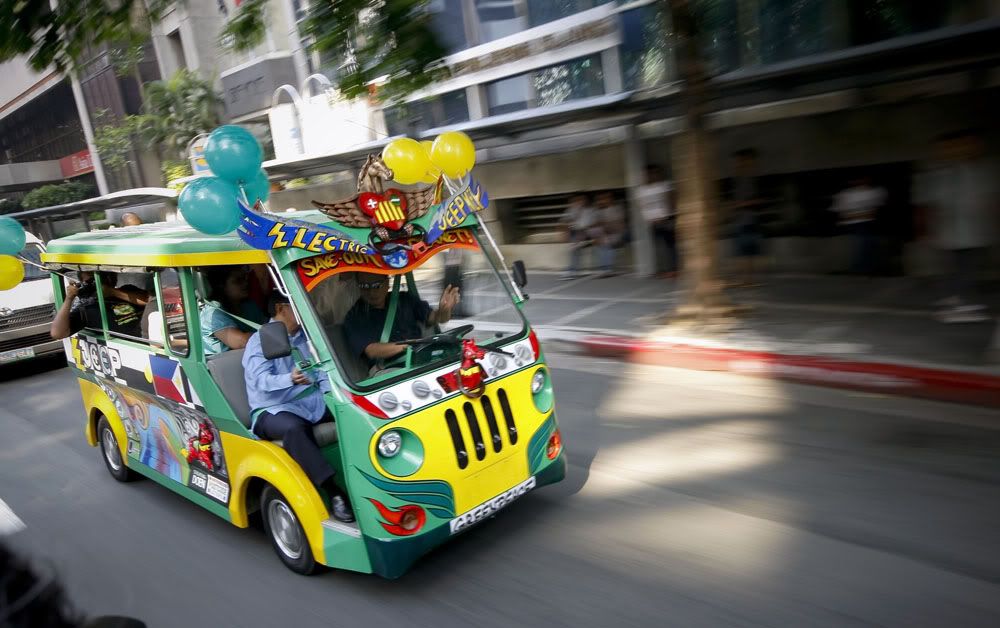
courtesy of Greenpeace southeast asia
The LTO will issue orange plates for these environment-friendly vehicles which are now classified as low speed vehicles with a maximum speed of 60 kilometers per hour.
E-jeepneys cost 625,000 pesos a unit, while reconditioned diesel engine jeepneys cost from 700,000 to 800,000 pesos, depending on how many passengers it can carry.
From Trapik.com posted 3/2009
-
 Tsikoteer
- Join Date
- Oct 2002
- Posts
- 29,354
August 14th, 2009 10:29 AM #4First things first. Find a production method which would give finished vehicles curves. What is the point of trying to push PHUV if all you will produce are vehicles which look like cardboard boxes on wheels?

-
Tsikot Member Rank 3
- Join Date
- Jun 2007
- Posts
- 2,857
August 14th, 2009 10:46 AM #5 Originally Posted by ghosthunter

hehehe
Hindi naman po sir...
Khit mukhang gorilla at darna yung gawa nila, malaki naman improvement nila sa mga bulok at karag-karag na jeepney..
Tsaka naman sila e...
Anyway, just my opinion sir.
Last edited by jpdm; August 14th, 2009 at 10:49 AM.
-
Tsikoteer
- Join Date
- Oct 2002
- Posts
- 29,354
August 14th, 2009 10:56 AM #6I agree that a cardboard box with proper doors is an improvement over the old jeepney style design (no doors anywhere) but I think doors on cars isn't anything new these days. Originally Posted by jpdm
Even the old Ford Model T already had proper doors.

-
Tsikot Member Rank 3
- Join Date
- Jun 2007
- Posts
- 2,857
August 14th, 2009 02:48 PM #7Hmmmm, indeed, the Model T is a cardboard box with proper doors.....

Anyway, the e-jeepney still looks better than this..

Last edited by jpdm; August 14th, 2009 at 03:01 PM.
-
Tsikoteer
- Join Date
- Oct 2002
- Posts
- 29,354
August 14th, 2009 04:07 PM #8Looks can be deceiving. Originally Posted by jpdm
The e-jeepney can be compared to a lightweight extended golf cart that is only better than the traditional jeepney in the fact that it uses electricity. Other than that, they are about the same, open air, no doors, pure lack of any safety in design.
-
Tsikot Member Rank 3
- Join Date
- Jun 2007
- Posts
- 2,857
August 14th, 2009 05:28 PM #9Well, at least you agree with me that the e-jeepney or e-PHUV is still better than a dirty (smoke belching) rickety jeepney.. Originally Posted by ghosthunter
They are in fact clean (no emission) and good for the environment!

Last edited by jpdm; August 14th, 2009 at 05:30 PM.
-
Tsikoteer
- Join Date
- Oct 2002
- Posts
- 29,354
September 1st, 2009 10:28 PM #10You forget... Originally Posted by jpdm
Would you want to produce and dispose of toxic waste from making and disposing lead-acid batteries. And those plastic resin body shells also require some liters of old dinosaur to manufacture them as well.
That old jeepney can be as clean or even cleaner if you just use appropriate tech like converting the surplus diesel engine to a refurbished gasoline engine with Auto-LPG conversion kit. What you end up is a jeepney that have emissions to meet and beat the clean air requirements for cars.
The plus side, no need to have new infrastructure set up like a battery charging station. Heck! ... where does the electricity to charge the batteries come from anyway? Oil and coal burning powerplants, that's where.
So you argue, "solar!"...
Yes, solar can be used BUT it is pricey and you need a very big (read: very expensive) solar array to charge a single e-jeepney's battery pack. How do you charge the other battery packs then?
With regular jeepneys running on Auto-LPG, you don't need to setup new facilities since it's already there servicing taxi cabs and private cars as well. Given LPG is cheaper than gasoline and diesel, it pays for itself in fuel cost savings.
-
Tsikot Member Rank 3
- Join Date
- Jun 2007
- Posts
- 2,857
September 1st, 2009 11:05 PM #11Good point. But e-phuv is better than those ugly smoke belching and rickety jeepneys.
Anyway, an old article that talks about the significance of e-jeepneys of PHUV, Inc. and MVPMAP.
Fact is Makati, Greenpeace and Bacolod are going for it.
And there are schools who are using such vehicle.
Vol. XXII, No. 93
Wednesday, December 3, 2008 | MANILA, PHILIPPINES
Businessworld Online
Revival of native auto industry eyed via e-jeepneys
THE BUSINESS arm of a local automaker industry group plans to sell up to 200 units of electric jeepneys (e-jeepneys) in the next two years in a bid to revive the country’s native car manufacturing sector.
In a telephone interview PhUV, Inc. President Ferdinand I. Raquelsantos said they had received 44 orders from environment group Green Peace.
He said 26 vehicles would be delivered by the end of December, while the rest will come next year.

— Jonathan L. Cellona
"Our clients include malls, local governments, villages and resorts, but each has ordered only one unit," he said in Filipino.
The e-jeepney is a cleaner alternative to its smoke-belching, gas-powered counterpart. It can carry up to 14 passengers and make its way through foot-high floods.
-
Tsikot Member Rank 3
- Join Date
- Jun 2007
- Posts
- 2,857
September 1st, 2009 11:20 PM #12Article about the e-PHUV
This was written by Ducky Paredes.
Posted on Wednesday, July 8, 2009, at 6:14 am.
Filed under Malaya.
It is sad that the government bureaucracy is unable to help those assembling electric jeepneys. They would like to be granted incentives so that they can expand production, Trade Undersecretary Elmer Hernandez says that it is too bad that they cannot be granted Board of Investments (BOI) approval and incentives: “To do that they must be a participant of the Motor Vehicle Development Program, which sets a minimum investment requirement for the assembly of local vehicles.”
[SIZE=2]The Motor Vehicle Parts Manufacturers Association of the Philippines has been producing five to 10 electric jeepneys a month PhuV Inc., its business unit.[/SIZE]
Toyota Motors produces an electric vehicle called Prius, which is designed for highway driving. The electric vehicles being produced locally are mainly for use within subdivisions or for short trips to school or the neighborhood supermarket.
The electric vehicles now being produced reduce carbon emissions by 50 percent, and they may be plugged overnight into any electricity outlet to run for up to eight hours the next day. Too bad that the government can not give them any incentives even as it does to imported vehicles that are only “assembled” in the Philippines.
“Assembled” is in quotes since most vehicles imported with incentives come in practically whole and will need only a few hours of “assembly” before they are driven on our streets.
-
Tsikot Member Rank 3
- Join Date
- Jun 2007
- Posts
- 2,857
-
Tsikoteer
- Join Date
- Oct 2002
- Posts
- 29,354
September 1st, 2009 11:30 PM #14Like I said, conversion to using a petrol engine converted to Auto-LPG would make those existing jeepneys clean and green. Probably even greener and economically self-viable if you consider the entire scope of the project and NOT the short sighted vision that have plagued every so-called government sponsored environmental projects from the past to today. Originally Posted by jpdm
Maybe you should post a link to that elusive old article for us to read...Anyway, an old article that talks about the significance of e-jeepneys of PHUV, Inc. and MVPMAP.
And only because there is funding from the government and abroad pushing the project forward.Fact is Makati, Greenpeace and Bacolod are going for it.
Ask you this... what happens when the government money dries up and the e-jeepney project has to sustain itself? It's been over a year and I don't see much acceptance for the e-jeepney in the public transport in Makati. I tend to see more e-trikes in The Fort area than e-jeeps.
Using it and benefiting from it are two different things.And there are schools who are using such vehicle.
-
Tsikoteer
- Join Date
- Oct 2002
- Posts
- 29,354
September 1st, 2009 11:36 PM #15Given the main components e-jeeps are actually imported from another country, doesn't that defeat the purpose of doing the e-jeeps? It would just be like as if we were using imported engines with locally built body shells to produce jeeps and buses today?“Assembled” is in quotes since most vehicles imported with incentives come in practically whole and will need only a few hours of “assembly” before they are driven on our streets.
-
 Verified Tsikot Member
- Join Date
- Nov 2008
- Posts
- 255
September 1st, 2009 11:47 PM #16As I remember, the PHUV was featured in Discovery Channel and actually won first price in the TV series (Ecopolis). The selling point was that the electrity will be sourced from methane gas from Smokey Mountain or other dump sites.
http://science.discovery.com/video/ecopolis.html - Look for the Jeepney episode.
-
Tsikot Member Rank 3
- Join Date
- Jun 2007
- Posts
- 2,857
September 2nd, 2009 12:24 AM #17Hmmm...auto-lpg, economically self-viable? For public transport? I doubt. Originally Posted by ghosthunter
I have included the source why not just google the supposedly "elusive" old article?Maybe you should post a link to that elusive old article for us to read...
Point is there is funding. If it become successful, maybe more will come.And only because there is funding from the government and abroad pushing the project forward.
Again, you cant deny the fact that Makati, Bacolod and Greenpeace pushed for it.
To early to predict. Btw, what do you think?Ask you this... what happens when the government money dries up and the e-jeepney project has to sustain itself? It's been over a year and I don't see much acceptance for the e-jeepney in the public transport in Makati. I tend to see more e-trikes in The Fort area than e-jeeps.
Of course.Using it and benefiting from it are two different things.
But for your information, the school is definitely benefiting from it. I think you cant argue with that.
Point is, its better than nothing. e-PHUV is 60% local. Originally Posted by ghosthunter
Alot better than importing everything like those mostly CKD (all-imported auto kits), SKDs (all-imported except tires and batteries?)and of course the all imported CBUs with zero local content ..what benefit can the Philippines get from these companies (Toyota, Hyundai etc.) aside from employment (hiring contractuals and employees paid just above minimum wage?)
Definely a drain to our GIR and a source of our trade deficit.
Besides, what was the experience of Hyundai and these Chinese, Malaysian, and Indian vehicles? They first used imported engines and then eventually manufactured them under license.Last edited by jpdm; September 2nd, 2009 at 12:39 AM.
-
Tsikot Member Rank 3
- Join Date
- Jun 2007
- Posts
- 2,857
September 2nd, 2009 12:25 AM #18Correct. Originally Posted by allanctan
It more viable in the long term and communities will benefit compared with those expensive fossil fuels using all-imported technology.
-
Tsikoteer
- Join Date
- Oct 2002
- Posts
- 29,354
September 2nd, 2009 12:51 AM #19 Originally Posted by allanctan
As I remember, we have CNG buses that is supposed to be running on CNG sourced from the local NG well... yet that one seems to have fallen through.
Do you expect to have a methane fuelled power plant up and running? Excuse me but I would have to see it before I believe it especially with the kind of track record we have in the Philippines for such projects.
-
Tsikoteer
- Join Date
- Oct 2002
- Posts
- 29,354
September 2nd, 2009 01:16 AM #20Yet the taxis are benefitting from cheap Auto-LPG for a few years already and that is without any government dole outs. Originally Posted by jpdm
Why google when you seemingly have the actual link saved somewhere on your PC?I have included the source why not just google the supposedly "elusive" old article?
it is your mention of the existence of the supposed article. So maybe you should defend your statement by posting the link to it, right?
The point is, it only exists while outside funding will keep it going. Can you say that it would be self-sufficient and economically viable once the outside funding stops?Point is there is funding. If it become successful, maybe more will come.
Again, you cant deny the fact that Makati, Bacolod and Greenpeace pushed for it.
I am a pessimist on this especially as it concerns things like the Philippine government and such. I think it would last only a couple of years once funding dries up for it.To early to predict. Btw, what do you think?
Cite the school.But for your information, the school is definitely benefiting from it. I think you cant argue with that.
But the point is, is that 60% local stuff critical parts? No! Don't argue percentages when the critical components are still all imported.Point is, its better than nothing. e-PHUV is 60% local.
It's just like arguing the percentage of a locally built bus. It might be 80% local but it's critical parts are still all imported.
Well, buying and properly applying the correct technology like Auto-LPG kits can lead to better solutions that are self-sustaining and socially beneficial like public transport that can be both cheap for the riding public yet profitable for the operator.Alot better than importing everything like those mostly CKD (all-imported auto kits), SKDs (all-imported except tires and batteries?)and of course the all imported CBUs with zero local content ..what benefit can the Philippines get from these companies (Toyota, Hyundai etc.) aside from employment (hiring contractuals and employees paid just above minimum wage?)
Definely a drain to our GIR and a source of our trade deficit.
What is the point of trying to be "green" or "locally-made" when it is not economically feasible to be self-sustaining?
You are citing countries with populations that can sustain such enterprises into technology transfer. Unfortunately the Philippine experience in such ventures of so-called "technology transfer" is nothing more than simply a bust. Our car companies are nothing more than assembly plants for parts shipped from abroad. Most critical parts (like engines) are still made elsewhere as it was for decades.Besides, what was the experience of Hyundai and these Chinese, Malaysian, and Indian vehicles? They first used imported engines and then eventually manufactured them under license.


 Reply With Quote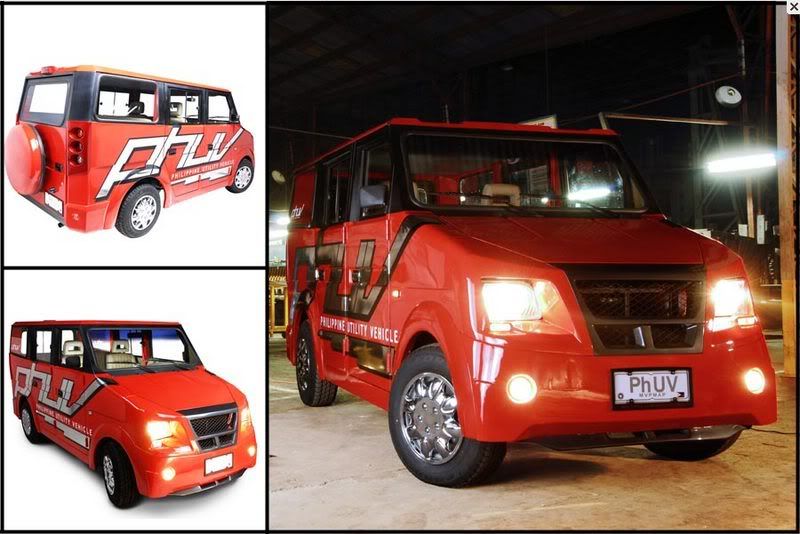
 Originally Posted by ghosthunter


